Experience the raw energy and pristine purity of the Deba Prasad Gharana style of Odissi. Learn the historical roots, traditional Mudras, and visual heritage of classical dance.
Nrutyayan follows the traditional style propagated by Late Dr. Deba Prasad Das, which was popularized globally by his able protégé, Guru Sri Durga Charan Ranbir.
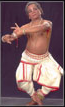
The Deba Prasad Gharana of Odissi retains its pristine purity in its undiluted, authentic form. The style is uniquely characterized by its raw energy, dynamic poses, and deep spiritual connection. A key aspect of the style is the concept of Tridhara (three streams).
Guru Deba Prasad believed that Odissi as a dance form evolved from tribal, folk, and classical culture, and thus conceptualized the Tridhara style to incorporate elements from all three roots. Furthermore, the **Sabda Swara Pata** remains an integral part of the Deba Prasad tradition, adding deep rhythmic structures to the choreography.
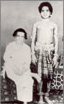
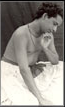
Deba Prasad was born in Kantapada, in Cuttack district. His father, Sri Durga Charan Das, was a police Sub-inspector. Deba Prasad's entry into the art world was through music lessons in his childhood under his grandfather Bauribandhu Das, who was well-versed in singing Chhanda, Bhajana, and Janana.
The dance connection came when his father was posted at Puri. Deba Prasad as a boy would skip school to visit the Akhada run by the famous Guru Mohan Mahapatra, hiding his school bag in the sea-shore sand. During this period, he took dance lessons from Kokila Prava Mahari and music lessons from Singhari Shyamasundar Kar.
Since dance was not a lucrative profession in the early days, Deba Prasad worked in a printing press during the daytime. His dance and theatrical activities were reserved for the evening and late-night hours.
By age 15, he was working at the Annapurna Theatre in Cuttack, playing comedy roles and dancing. After leaving the theatre in 1954, he worked as a dance teacher at Utkal Sangeet Samaj and the National Music Association. During this stay, he came in contact with Kavichandra Kali Charan Pattnayak, from whom he learned many traditional aspects of Odissi under a small monthly scholarship.
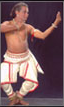
In 1954, Guru Deba Prasad traveled to Delhi to accompany Dr. Priyambada Mohanty Hejmadi on the Mardala, marking the first time Odissi was performed outside Odisha. Late Dr. Charles Fabri, the dance critic of the Statesman, was so impressed that he noted: "Odissi may be an older and more pure dance form than Bharat Natyam."
In 1957, Indrani Rehman, a professional dancer looking for classical authenticity, became his disciple. Together, they presented Odissi across major Indian stages and, in 1959, launched a six-month international tour across England, Europe, and the USSR. They performed at the Rashtrapati Bhavan for President Eisenhower, Queen Elizabeth, and Prime Minister Jawaharlal Nehru, introducing Odissi to five continents.
Guru Deba Prasad played an active role in 'Jayantika', a group striving to standardize Odissi according to classical norms. In search of purity, he traveled deep into the interiors of Odisha, studying the pithas, temples, Mahari traditions, and Gotipua systems. He traveled to Sambalpur to learn Sabda-Swara-Puta directly from local masters.
In 1964, when the Utkal Sangeet Mahavidyalaya was founded in Bhubaneswar, Deba Prasad joined the institution to teach Odissi. He successfully trained generations of dancers until his sudden demise on 16th July 1986, leaving an irreplaceable void in the world of classical dance.
Today, thanks to the efforts of Guru Sri Durga Charan Ranbir, the style from the Deba Prasad school continues to thrive with the highest number of exponents worldwide.